

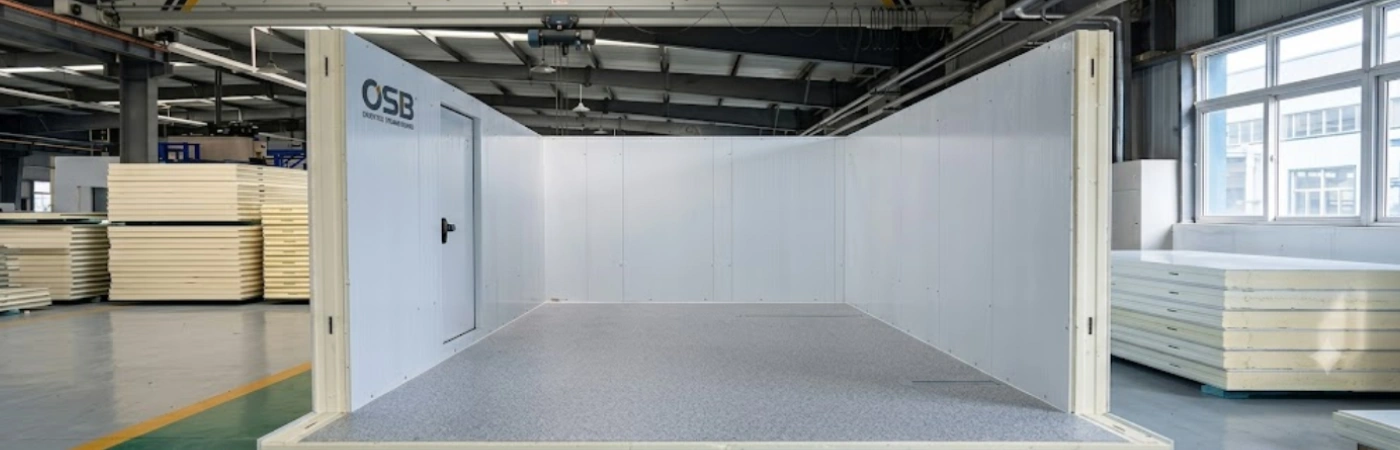
Cold room panels are insulated construction panels used to build temperature-controlled rooms for storing food, dairy products, pharmaceuticals, frozen goods, and other temperature-sensitive materials. They typically consist of an insulating core enclosed between protective metal sheets. The proper panel system promotes effective refrigeration, lowers heat transfer, and maintains the necessary storage temperature.
For businesses planning cold storage in Hyderabad, Telangana, or elsewhere in India, choosing suitable cold room panels involves understanding the insulation material, panel thickness, joint design, surface finish, doors, and operating temperature.
How Do Cold Room Panels Operate?
Cold room panels are prefabricated insulated sections assembled to create the walls and ceilings of refrigerated spaces. Depending on the room design, insulated flooring and specialised doors are also required.
The insulation core slows heat transfer between the warmer external environment and the cooler interior. Closely fitted joints and suitable sealing systems help minimise air leakage, allowing the refrigeration equipment to maintain the target temperature.
Unlike conventional masonry construction, prefabricated panels are manufactured in sections and assembled on-site. This approach can simplify construction, support custom room layouts, and make future modifications easier when the system is designed for them.
A complete cold room requires more than insulated walls. Its performance also depends on refrigeration capacity, door openings, floor insulation, vapour barriers, drainage, and installation quality.
What Kinds of Cold Room Panels Are There?
Cold room panels can be classified by their insulation core, intended application, and construction requirements.
PUF Cold Room Panels
PUF (polyurethane foam) panels contain a rigid polyurethane insulation core between protective metal facings. Because of their prefabricated construction and insulating qualities, they are frequently utilized in refrigerated rooms.
Key characteristics include:
- Low thermal conductivity that helps limit heat transfer.
- Lightweight construction compared with conventional insulated masonry walls.
- Metal surfaces available in different finishes.
- Interlocking joints that help create a close-fitting enclosure.
- Different thicknesses and dimensions to suit project requirements.
PUF panels are suitable for many chiller rooms, freezer rooms, food storage facilities, and temperature-controlled warehouses. OSB Prefab’s cold storage page lists PUF insulation panels in several thicknesses, with configurations selected according to project requirements.
PIR Insulated Panels
PIR (polyisocyanurate) panels use a rigid foam insulation core related to polyurethane chemistry. They may be considered where thermal performance and documented fire performance are important selection factors.
Actual performance depends on the product formulation, panel assembly, and applicable test results. Buyers should compare verified technical documentation rather than assuming that every PIR panel has the same fire classification.
EPS Insulated Panels
EPS (expanded polystyrene) panels use a lightweight cellular plastic insulation core. They are used in certain building and insulation applications where their thermal properties and cost suit the project.
For low-temperature rooms, compare EPS panels with PUF and PIR alternatives based on the required operating temperature, insulation thickness, joint details, moisture protection, and applicable safety requirements.
Rockwool Insulated Panels
Rockwool panels use mineral wool as the insulation core. They can be considered where non-combustibility and specific fire-performance requirements are important.
However, thermal performance, moisture behaviour, and construction details differ from foam-core panels. Confirm that the selected assembly is suitable for the intended cold storage environment.
Which type should you choose? PUF panels are a common option for cold rooms, but the best choice depends on thermal requirements, fire safety, hygiene, moisture exposure, and the project’s technical specifications.
What Components Make Up Cold Room Panels?
A cold room panel system combines insulation, protective facings, joints, and sealing accessories.
Insulation core
The core provides thermal resistance. Its thickness and thermal conductivity influence how much heat passes through the panel. The core must be selected according to the required storage temperature and surrounding conditions.
Metal facings
Common facing materials include:
- Pre-painted galvanized steel (PPGI): A coated steel surface used in many insulated panel systems.
- Galvanized steel (GI): Selected according to the required protective finish and application.
- Stainless steel: Considered for environments where corrosion resistance and cleaning requirements justify its use.
The correct surface depends on humidity, cleaning chemicals, potential corrosion, impact exposure, and hygiene requirements.
Panel joints and sealants
Tongue-and-groove and cam-lock systems help connect adjacent panels. Appropriate sealants and vapour-control details are important for reducing air leakage and limiting moisture movement through joints.
Door frames, corners, wall-to-floor junctions, and ceiling connections should also be integrated carefully. Poor sealing can undermine the performance of otherwise well-insulated panels.
Important Characteristics and Advantages of Cold Room Panels
1. Thermal insulation
Heat transfer through the room enclosure is decreased by insulated panels. This helps refrigeration equipment maintain the target temperature when the complete cold room is properly designed.
2. Faster construction
Factory-manufactured panels can be assembled on-site, potentially reducing construction time compared with conventional wall-building methods.
3. Flexible layouts
Panel systems can accommodate different room sizes, partition arrangements, and storage zones. This flexibility is useful for facilities that need separate chillers, freezers, or product storage areas.
4. Hygienic surface options
Suitable coated metal and stainless-steel surfaces can support cleaning procedures in food and pharmaceutical environments. Surface finish, joint design, and cleaning products must be compatible with the facility’s hygiene requirements.
5. Space-efficient construction
Insulated panels can provide thermal resistance without relying on thick conventional masonry walls. The actual space savings depend on the panel thickness and the room’s overall design.
6. Manageable maintenance
Routine inspection helps identify damaged coatings, loose fittings, failed gaskets, and moisture ingress before these problems become more serious.
7. Potential energy savings
By limiting unwanted heat transfer, insulation can reduce the cooling load. Actual electricity consumption depends on the refrigeration equipment, room temperature, ambient conditions, door-opening frequency, product load, and maintenance practices.
Technical Specifications of Cold Room Panels
- Insulation Core: PUF (Polyurethane Foam) insulation for cold room applications.
- Panel Thickness: 30 mm to 150 mm, depending on the required configuration.
- Standard Panel Width: 1,200 mm.
- Panel Length: Up to 9,000 mm.
- Joint System: Cam-lock or tongue-and-groove joints with suitable silicone sealing.
- Temperature Range: +15°C to −40°C, depending on the system configuration.
- Facing Material: PPGI, galvanized steel, stainless steel, or other suitable metal facings, subject to availability.
- Surface Finish: Selected according to hygiene, cleaning, and environmental requirements.
- Door System: Hinged or sliding cold room doors, depending on the design.
- Thermal Performance: Confirm the declared thermal conductivity and insulation performance for the selected panel.
Panel specifications can vary by product and configuration. Temperature range alone does not establish that a panel is suitable for a particular freezer; the full enclosure and refrigeration system must be designed for the required operating conditions.
How thick should cold room panels be?
The required thickness depends on the target temperature, room dimensions, external temperature, insulation performance, and operating costs.
For example, a room storing chilled vegetables may have different requirements from a freezer holding frozen meat. A qualified cold room designer should calculate the insulation requirement instead of selecting thickness based only on price.
Applications of Cold Room Panels
Food processing and frozen food storage
Food processors use cold rooms for meat, seafood, prepared food, and frozen products. Insulated walls and ceilings help the refrigeration system maintain suitable storage conditions.
Dairy and beverage facilities
Dairy plants may need separate temperature-controlled rooms for milk, cheese, butter, and other products. Panel selection should consider moisture exposure, cleaning practices, and the temperature required for each product.
Pharmaceutical storage
Pharmaceutical facilities may require temperature-controlled spaces for medicines and other sensitive materials. Panels form part of the insulated enclosure, while monitoring systems, alarms, refrigeration equipment, and operating procedures help maintain required conditions.
Fruit and vegetable storage
Produce storage needs vary by crop. Temperature, humidity, air circulation, and ventilation must be considered alongside panel insulation.
Cold-chain logistics
Distribution centres use refrigerated rooms to hold products before transport. Suitable doors, insulated panels, and well-planned loading areas help accommodate frequent movement of goods.
Industrial storage
Some industrial materials require controlled-temperature environments. The panel core, facing material, fire protection, and refrigeration arrangement should be chosen according to the specific material and operating conditions.
How to Choose the Right Cold Room Panels
Follow these steps before purchasing panels for a new facility or upgrading an existing room.
- Define the storage conditions: Establish the required temperature range and the characteristics of the stored products.
- Calculate insulation needs: Consider ambient conditions, room dimensions, heat loads, and door-opening frequency.
- Select the core and facing: Compare thermal performance, moisture resistance, surface finish, and documented fire performance.
- Review the joint system: Check panel connections, corner details, floor junctions, and sealing arrangements.
- Plan doors and refrigeration: Match the door design and refrigeration capacity to the room’s intended use.
- Confirm installation details: Review supports, floor insulation, vapour barriers, drainage, and the manufacturer’s installation instructions.
A practical example is a food distributor planning a freezer in Hyderabad. The team must consider the target storage temperature, local ambient conditions, delivery frequency, door openings, product volume, and required insulation before finalising the panel thickness and refrigeration capacity.
Installation and Maintenance Tips
Proper installation helps preserve thermal performance and service life.
- Align and seal panel joints according to the manufacturer’s instructions.
- Prevent damage to metal facings during transport and installation.
- Coordinate wall and ceiling panels with floor insulation and vapour barriers.
- Inspect door gaskets, hinges, locks, and closing mechanisms regularly.
- Check for condensation, corrosion, coating damage, and moisture entering joints.
- Use cleaning products compatible with the panel finish.
- Repair damaged panels and failed seals promptly.
One common mistake is selecting panels based only on thickness while overlooking doors and joints. Even well-insulated panels may underperform if warm, moist air enters the room or the refrigeration system is incorrectly sized.
Cold Room Panel Solutions in Hyderabad
Businesses in Hyderabad, Secunderabad, and across Telangana may need cold rooms for food processing, dairy, pharmaceuticals, and logistics. OSB Prefab Technologies supplies prefabricated insulated panel systems and cold room solutions from its facility in the Cherlapally industrial area of Secunderabad. Its products are designed for project-specific applications.
Before requesting a quotation, prepare the room dimensions, required temperature, product type, door configuration, and intended usage. These details help the supplier recommend a suitable panel configuration.
Frequently Asked Questions
1. What are cold room panels made of?
They typically contain an insulation core, such as PUF, PIR, EPS, or Rockwool, between protective metal facings. The appropriate material depends on thermal, hygiene, moisture, and safety requirements.
2. Which panels are commonly used for cold storage?
PUF panels are commonly used because of their insulation properties and prefabricated construction. The final selection depends on the room’s operating temperature and technical requirements.
3. What thickness is suitable for cold room panels?
Thickness depends on the storage temperature, ambient conditions, room dimensions, and insulation calculations. Chillers and deep-freezer rooms may need different configurations.
4. Can cold room panels be used for pharmaceutical storage?
Yes. Insulated panels can form the room enclosure, but maintaining pharmaceutical storage conditions also requires suitable refrigeration, temperature monitoring, alarms, and operating controls.
5. Do insulated cold room panels reduce electricity consumption?
They can reduce heat transfer and help lower refrigeration demand. Actual energy use depends on the entire cold room design, operating practices, and equipment efficiency.
6. Are cold room panels suitable for food processing plants?
Yes, when the panel materials, finishes, joints, and sealants are suitable for the facility’s hygiene and cleaning requirements.
7. What affects the cost of cold room panels?
Cost depends on insulation material, thickness, dimensions, facing finish, joint system, doors, accessories, transport, and installation. Refrigeration and flooring may be separate costs.
8. Where can I find cold room panel suppliers in Hyderabad?
You can contact OSB Prefab Technologies to discuss cold room panels, insulation requirements, and project-specific configurations in Hyderabad and other parts of India.